The Grace of a Larger Story, What a Harvested Cornfield Reminded Me About the Stories We Share - and the Story That Holds Us
They cut the corn around our house, and suddenly I could see farther than I wanted to.
Every other summer, it grows into a comforting wall around us. The alternate years are soybeans, which have their own beauty but very little to offer someone who enjoys the feeling of being tucked away. I love the corn’s height and rustling, the privacy it gives us, and the pleasure of watching something grow outside my door.

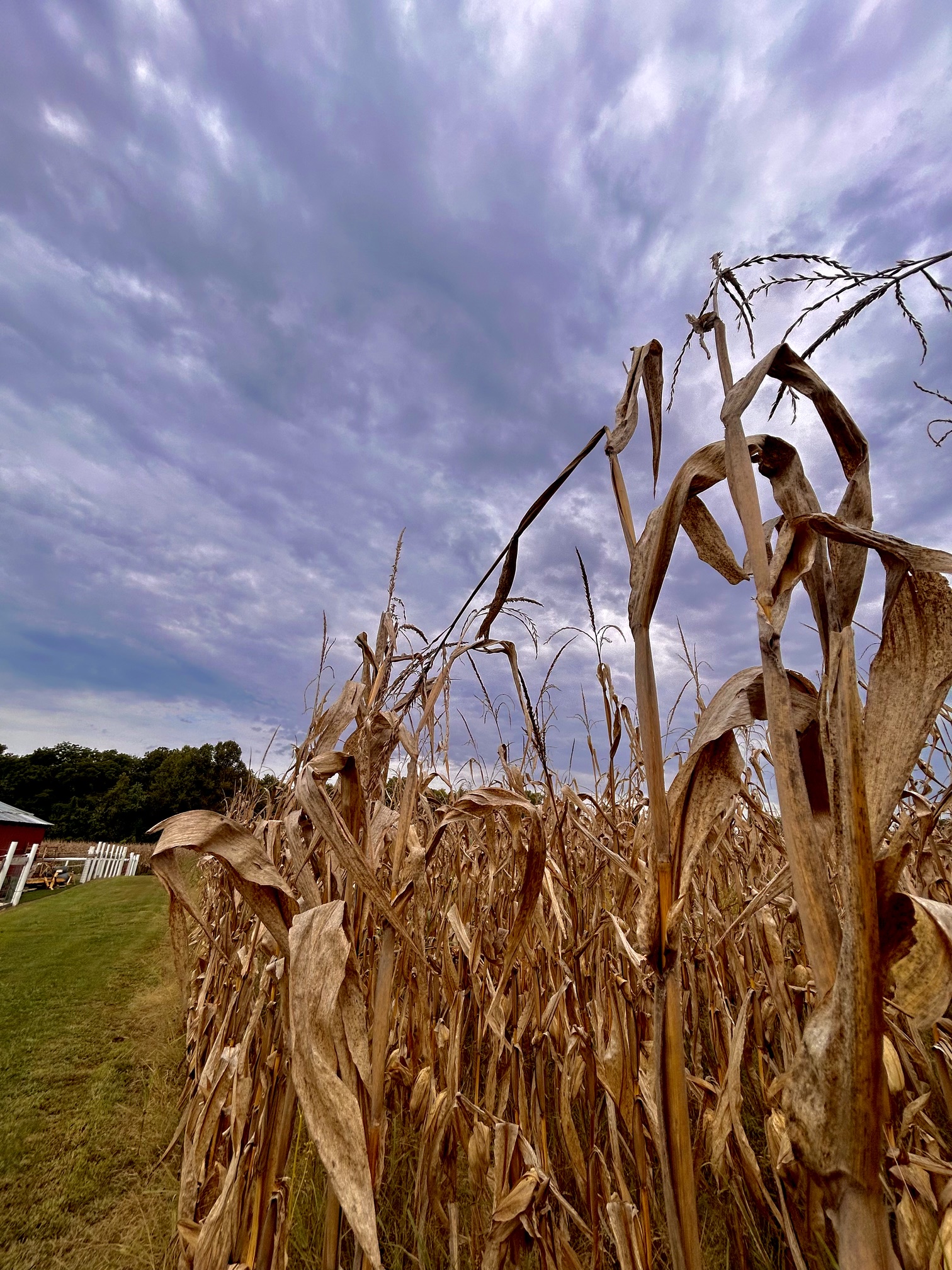
This year, I watched it grow alongside our new puppy, Sadie, until it surpassed her entirely and became a kingdom for the cats. They slipped between the rows to escape her enthusiasm, then sprang out to frighten her whenever the balance of power needed correcting. After having a horse escape and run across the highway, I also liked to imagine those tall stalks might look enough like a fence to discourage another adventure. I would prefer to leave that theory untested.
Some mornings, I carried my coffee outside and sang the famous line from Oklahoma! at the top of my lungs. I don’t think the neighbors are close enough to hear, and Darrell has come to accept this particular feature of life with me.
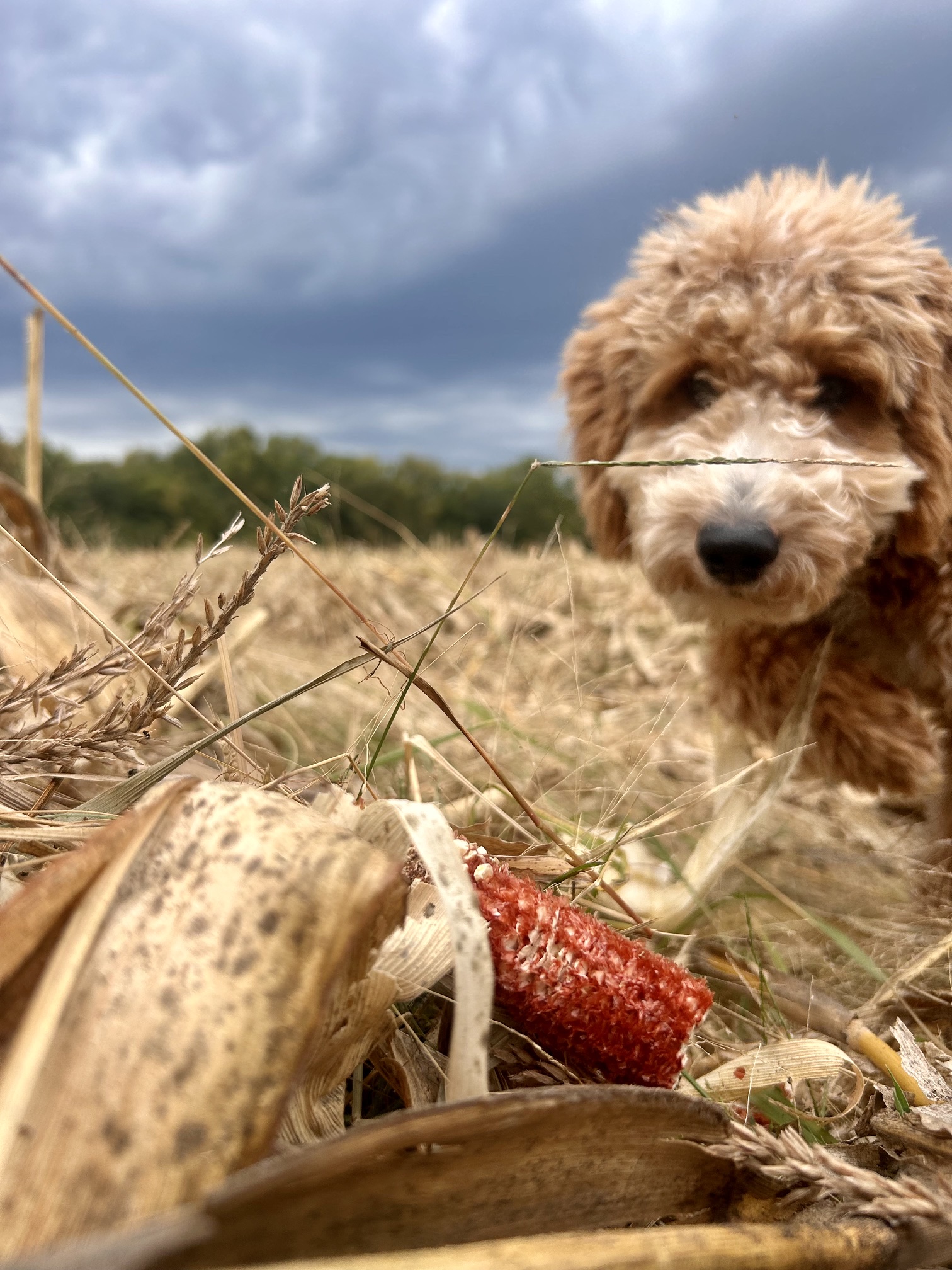
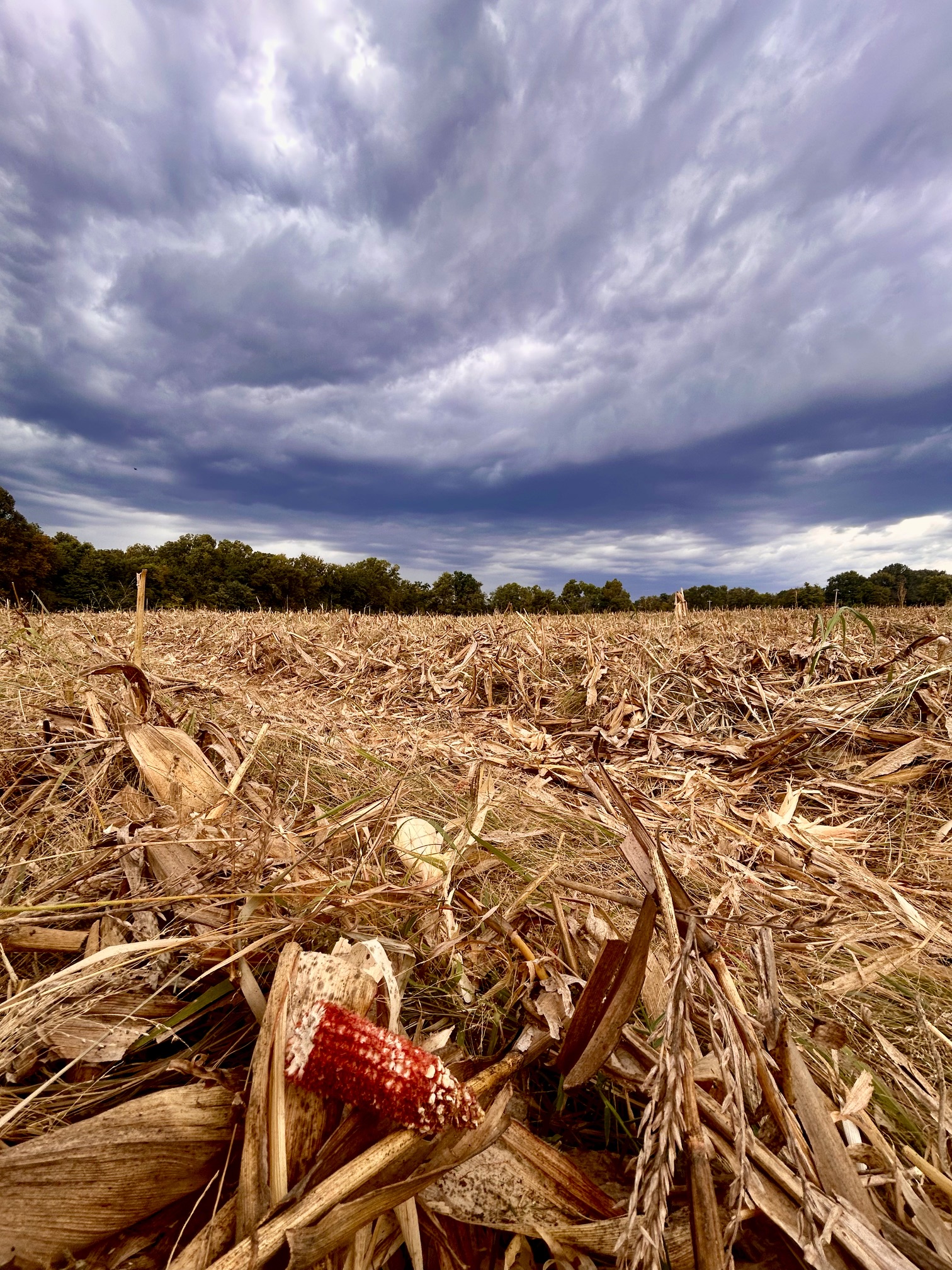
Then the farmer came, and the shelter I had watched grow all summer became a field of broken stalks and scattered corn.

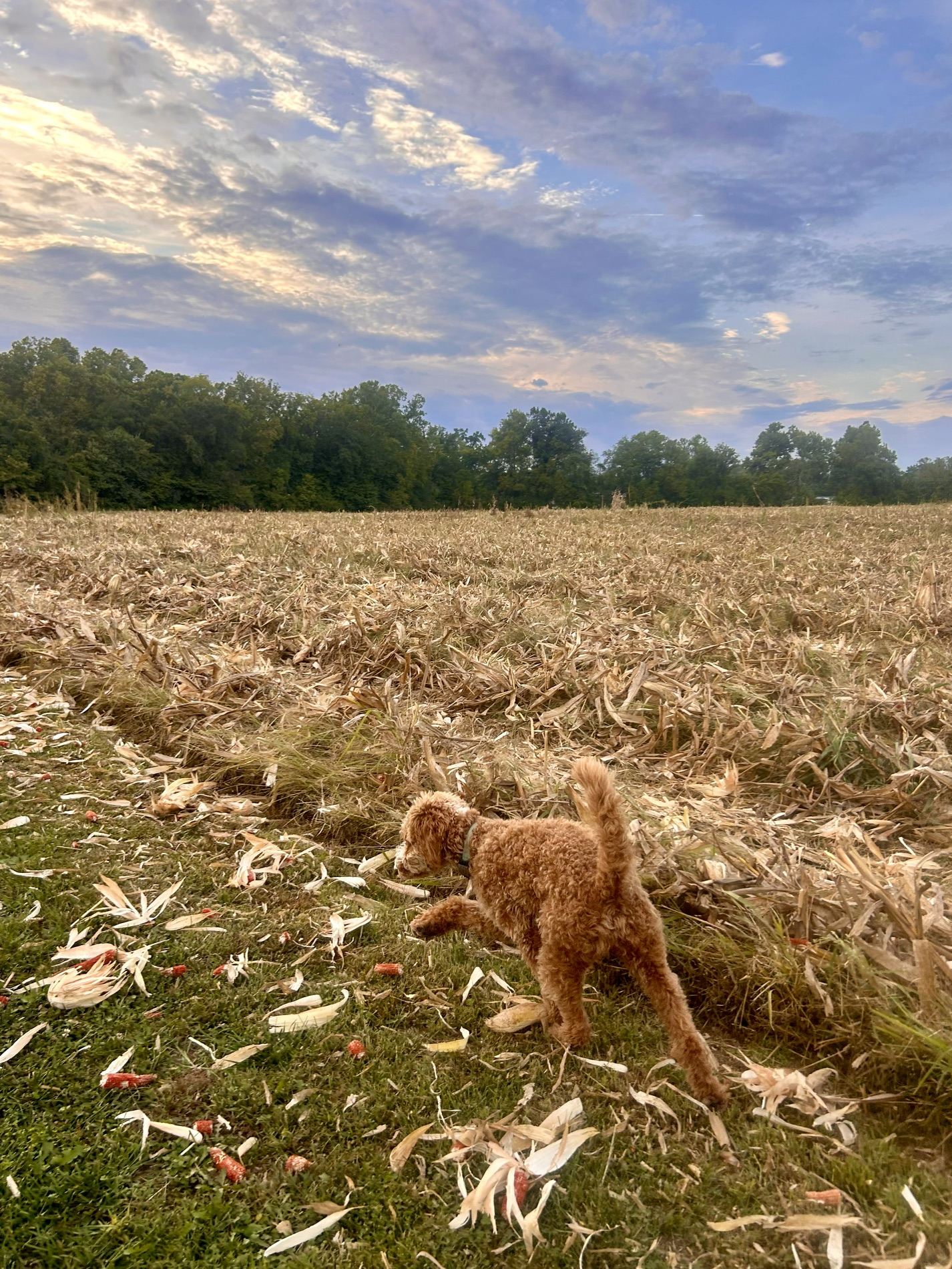
While Darrell offered him a cold beer, I took pictures and had my small moment of mourning.
For me, the harvest marked the end of summer and the loss of a familiar comfort. For Darrell, it opened the view he had been waiting for: deer crossing the field as hunting season approached. For the farmer, it meant the return on months of labor, expense, weather watching, and waiting. What I had enjoyed as shelter, he had tended toward harvest.
I had recently returned from Restory Level 3 training, where I spent time engaging my own story and listening to the stories of others. I experienced how those stories could meet—how another person’s words might touch something in my own history, and how being present with one another could open understanding that neither of us would have reached alone. I was still carrying those encounters when I came home to this ordinary, familiar change.
Perhaps that is why I found myself looking at the field a little differently this year.
We were standing beside the same ground, but each of us saw it through a different life. My sadness was real, and so were their satisfaction and anticipation. The corn had belonged to my summer, but it had also belonged to the farmer’s work, my husband’s hopes, and the small adventures of the animals who share this place. I want to keep that thought in my hand and return to it: My story is always meeting other stories. What might I discover if I stay interested in where they touch?
Our stories do more than run alongside one another; they leave their traces on each other. Your story touches mine through what you share, what you carry, and how you meet me, just as mine touches yours. Sometimes another person’s experience awakens a memory we had nearly forgotten or gives us words for something we have never been able to name. Sometimes their presence becomes part of a new story—a moment when we were heard, welcomed, or able to risk being known. We cannot rewrite one another’s histories, but the way we listen and respond becomes part of what happens next. New interpretations can form about what happened, and new stories can be written.
Sometimes we are so occupied with what an event means to us that we forget to ask what it means to someone beside us. A little attention can reveal the hope beneath their excitement or the loss beneath a response we don’t understand. We might ask: What are you seeing here that I haven’t seen? What have you been waiting for? What does this change ask you to release?
These are questions I value in storywork, where we attend to particular scenes and the meanings we have carried from them. Another person’s presence can help us notice an overlooked detail, name a longing, or reconsider a conclusion that has shaped us for years. Understanding can deepen without requiring anyone to surrender the truth of what happened or excuse what was harmful.
The field has given me a small place to practice this, and it has brought me back to a larger intersection: the meeting of our personal stories with the story God has revealed in Scripture.


The grace of God’s story is over mine.
His story begins before my earliest memory and reaches beyond the endings I can see. It tells me who made me, what has fractured our world, what Christ has done to redeem us, and where he is bringing his people. My life has a place within that story, even when I cannot make sense of the scene I am living.
This month, I’ll be sharing more about how we become curators of grace—people who collect (notice and receive), tend (experience and remember), and live from (respond) to God's provision of grace. Our first focus is the grace of his larger story over ours. When we remember that story and bring our lives into conversation with it, we are practicing curating grace.
The movement of creation, fall, redemption, and consummation gives us questions to hold before God.
Creation: I was made to know him and to be known by him.
Before shame or loss entered the human story, God made us in his image for life with him and one another. Psalm 139 reminds us how intimately he knows the people he has made.
Chris Bruno of Restory Institute uses the language of First Story and Second Story to help us understand what we carry. Our First Story speaks to God’s design: we bear his image, with dignity and a capacity to reflect his character and love. I was made to know him and to be known by him; my story begins with his creative intention, before the meanings I would later learn to attach to myself.
Our Second Story is shaped by life in a fallen world—the wounds, shame, and experiences that mar that design, along with the conclusions we draw from them. We may come to believe that we are unwanted, that our needs are burdensome, or that being alone is safer than being known. Those beliefs can become the story we live from. The wounds are real, but the meanings we have made of them deserve another look in the light of God’s truth. (Chris Bruno, ReStory)
That distinction helps me remember that what has happened to me matters deeply, while the One who made me has more to say about who I am. As I consider a scene in my life, I can ask: What good longing is present here? Where do I desire belonging, beauty, safety, or love? What would it mean to receive my life as someone God made and knows?
Even my affection for the corn holds something worth attending to: delight in growing things, the comfort of shelter, and the joy of sharing a place with creatures I love.
Fall: Where is the brokenness of the world touching my story?
Genesis 3 names sin, shame, hiding, and fractured relationships. I can ask: Where am I experiencing loss or grief? Where have I been sinned against, and where do I need to confess my own sin? What shame is making it difficult to be known?
These questions give us room to tell the truth. Our longings have met a world that cannot fully satisfy them, and bringing that sorrow to God is part of living before him.
Redemption: Where do I meet Jesus in what I am carrying?
The Son of God came to us in the flesh and knew weariness, rejection, betrayal, and sorrow. He wept beside a grave and brought his anguish before his Father. Hebrews 4:15–16 invites us to approach him with confidence because he knows our weakness.
“The Word became flesh and dwelt among us” (John 1:14). God’s larger story comes close enough to enter our human life. In Jesus, we meet the Savior who knows suffering from within it and brings us into the grace of reconciliation with God.
I can ask: Where in the Gospels do I see Jesus experiencing something that speaks to my own life? What does his response reveal about his heart? How do his death and resurrection speak to the guilt, fear, or loneliness I am carrying?
Christ enters our suffering and acts to redeem us. Through him, we are reconciled to God and welcomed into a belonging we could never secure for ourselves.
Consummation: How can God’s promised future shape the way I live now?
Christ promises, “Behold, I am making all things new” (Revelation 21:5). That renewal will one day be complete, but its beginnings are already present in those who belong to him: “if anyone is in Christ, he is a new creation” (2 Corinthians 5:17). We live between the first signs of renewal and its fullness, learning even now to receive his love and respond to his grace.
I can ask: How am I freed to live from God’s love today? Where can I respond from grace rather than shame? What new act of courage, honesty, forgiveness, or delight might grow from the future he has promised?
Perhaps I can grieve an ending without deciding that everything good has ended with it. Perhaps I can listen to another person without losing my own voice, or receive a changed view while giving thanks for what once sheltered me. These questions are worth carrying, even when answers come slowly. They help me hold my own story with attention, remain interested in the stories around me, and remember the faithful God who holds us.
For now, Sadie wanders among the scattered stalks, the cats are reconsidering their strategy, and Darrell has his view of the deer. I still miss the corn, but I am beginning to appreciate what the open field allows me to see. I’ll keep taking pictures, gathering the small scenes of this place and pondering the lives that meet here. There is more in the field than what I first saw—and more grace in the story that holds us than I have yet learned to recognize.
Are you interested in learning more about storywork? I offer free initial consultations to explore if storywork is right for you.
amy@curatorsofgrac.net or visit my blog: curatorsofgrace.net
Click on my logo below to get a free download of the CHRIST acronym for lament and to sign up for the Curators of Grace monthly encouragement:

Linking up with these ladies this week:


 Previous Post